

The Fold Blog

Staying Active in Winter: How to Keep Moving When It's Cold Outside
As the temperature drops and daylight hours shorten, maintaining motivation to exercise can become challenging. Motivating ebbs and flows, but in the cooler months you might start to notice it becomes even harder to get up early and get outside. The allure of staying bundled up inside with a warm drink can often outweigh the desire to get moving. However, staying active during the winter months is crucial for both physical health and mental well-being. Here at foldUP, we've curated some tips, ideas, and inspiration to help you stay motivated and keep moving, even when the weather turns. Dress for Success: Layer Up Dressing appropriately for the cold weather is essential to staying comfortable and safe while exercising outdoors. If you prefer to workout at home, get dressed in a warm outfit, maybe even your slippers and a big hoodie. You'll eventually get warm and can start to strip off your layers, but starting warm is going to be a game changer when unfolding your mat and geting started. If you prefer to brave to cold, make sure you've invested in quality activewear that will keep you warm but not be uncomfortable when you start to sweat. Proper attire can make a world of difference, transforming a potentially uncomfortable experience into an enjoyable one. Knowing how to dress for winter workouts can keep you moving, no matter the weather. Set Realistic Winter Fitness Goals Winter can be a time of indulgence, making it essential to set realistic and attainable fitness goals. Whether it’s maintaining your current fitness level, improving your stamina, or simply staying active a few times a week, having a clear goal can provide the motivation needed to keep moving. Track your progress and celebrate small victories to keep yourself motivated. Setting fitness goals for winter helps maintain a sense of purpose and direction in your exercise routine. Indoor Workouts: Stay Active at Home When the weather outside is too cold to go out, bring your workout indoors. Home workouts can be just as effective as those done in a gym or outside. Some of our favourite online classes are: House of Sculpt, Go Chlo Pilates, Formode Wellness & Amy Carmody - but there are SO many good ones. Setting up a small, dedicated workout space in your home can also help create a motivating environment. Discovering indoor workout ideas can keep your fitness journey on track during the winter months. Join a Fitness Class or Group Social support can be a powerful motivator. Join a fitness class or find a workout buddy to help keep you accountable. Many gyms and community centers offer winter fitness programs, and there are also virtual classes available if you prefer to stay at home. Sharing your fitness journey with others can make the experience more enjoyable and provide the encouragement you need to stay on track. Finding a fitness community can boost your motivation and consistency. Focus on the Benefits of Winter Exercise Remind yourself of the numerous benefits of staying active, especially during the winter months. Regular exercise boosts your immune system, improves your mood by releasing endorphins, and helps combat the winter blues. Keeping these benefits in mind can serve as a strong motivator to get moving, even on the coldest of days. Understanding the benefits of winter exercise can reinforce your commitment to staying active. Mix Up Your Winter Workout Routine Variety is key to preventing workout boredom. Try incorporating different types of exercise into your routine to keep things interesting. Alternate between pilates, cardio, walking, running, strength training - whatever floats your boat! Exploring new activities can reignite your enthusiasm and make your fitness routine something to look forward to. We're all about finding movement that feels good for you! Plan Ahead for Winter Workouts Schedule your workouts just as you would any other important activity. Having a set plan makes it more likely that you’ll follow through, even when motivation wanes. Preparing your workout clothes and your mat or equipment in advance can also reduce the friction of getting started. Planning your winter fitness routine can enhance your consistency and commitment. Reward Yourself for Staying Active Incentives can be powerful motivators. Treat yourself to something enjoyable after a workout, whether it’s a warm bath, a favorite snack, or watching an episode of your favorite show. Positive reinforcement helps create a habit loop, making it easier to maintain your exercise routine. Or maybe you treat yourself to a brand new exercise mat - one that will support your fitness goals and one that can easily stay at home or come to classes with you. Rewarding your winter workout efforts can boost your motivation and satisfaction. Stay Consistent Finally, maintaining a consistent routine is crucial. They say it takes 66 days to form a habit. While that might seem overwhelming to hear, start small and stay consistent. Workouts don't need to be hour long sessions. Start with 10-15 minutes daily, and you might find yourself wanting more once the time is up. Be kind to yourself and recognise that some days will be harder than others. The key is to stay consistent and keep moving, no matter how small the effort may seem. Cultivating a positive mindset for winter workouts can support your long-term fitness goals. Staying active during the colder months requires a bit of extra effort and creativity, but the rewards are well worth it. By embracing winter activities, dressing appropriately, setting realistic goals, and exploring various workout options, you can maintain your fitness and well-being throughout the winter. Remember, every step you take, no matter how small, is a step towards a healthier, happier you.
Learn more
HOUSE OF SCULPT: The How & Why Behind The Launch Of Their Movement Platform
If you haven't tried a Pilates class with Nic and Sascha from HOUSE OF SCULPT, you're missing out. Meet Nicole and Sascha, two highly qualified instructors with a combined 22 years of teaching experience. They are passionate about making a lasting impact on the lives of their clients and are dedicated to creating a positive and empowering experience for every individual. Drawing on their backgrounds as former ballerinas, TEDx speakers, and renowned movement specialists, they've honed an approach that strikes the perfect balance between challenging and rewarding. With their passion, innovation, and relatable teaching methods, it is no surprise that this dynamic duo are shifting the narrative in the fitness industry. Tell us a little bit about you and where your movement journey began. N: I’ve been a registered Classical Ballet teacher for 15 years. I still teach a lot of Classical Ballet although Pilates has been a huge part of my training as a dancer. Pilates has supported me through all my era’s and I do not see it going anywhere! S: Before HOUSE OF SCULPT, I was studying Neuroscience and Psychology, and teaching Classical Ballet on the side. Although Pilates has always been a pivotal part of my training as a dancer and has been my main form of exercise in adulthood. What are some of the highs and lows you've faced as business owners? From redefining our community’s relationship with their bodies to shipping our SCULPT SETs across the globe and everything in between – the highs are like nothing else. The lows are never truly lows, but more so lessons. Things always take longer than you expect, there are always hiccups along the way and you will be tired. So forever learning to be flexible, patient and hopeful. What inspired you to launch House of Sculpt? HOUSE OF SCULPT officially launched in April 2022. We felt the ick big time with the fitness and wellness space. Detox this, dieting that, slim down here, tone up there. Our biggest why behind HOUSE OF SCULPT is changing the lens around why we move. Movement is a privilege and it should be seen that way. Let’s move to feel good and the rest will fall into place. What can students expect from a House of Sculpt session? A HOUSE OF SCULPT class is always fun, challenging and creative and will leave you feeling empowered and rewarded. We believe that movement on the mat is the ultimate indulgence and should not be paired with restriction. Our goal is to remind people that you can enjoy all the yumminess life has to offer and still honour your body with confidence. What inspires you to stay motivated and what are some tips for getting into a balanced and healthy routine? Having the knowledge that motivation is often the result of action – not the cause of it – is soooo helpful for getting into a balanced and healthy routine. It means that getting started, even in very small ways, is a form of active inspiration that naturally produces momentum. Make sure to start small so that the routine is achievable, write down what you plan to do and reward yourself when you do it! It’s about being kind to yourself and challenging any “all or nothing” attitudes. What is your favourite way to move your body? A signature HOUSE OF SCULPT Pilates class of course. How do you best calm your mind? N: Vedic Meditation, breathwork or a HOUSE OF SCULPT class. Never fails me. S: My remedies are: yoga nidra meditation, getting organised for the week, sauna sessions and a HOUSE OF SCULPT class of course! Want to try House of Sculpt? Use code FOLD15 for 15% off your first month!
Learn more
Behind The Lens: Vicky From Drishti Studio
Today we sat down with Vicky from Drishti Studio and we talked all things creative - how she got into the photography space, what inspires and how she landed working with some of the biggest wellness brands in Australia. We've worked with Vicky for foldUP's last 2 campaign shoots. Her attention to detail, creative direction and ability to make you feel comfortable and confident on the other end of the camera, is what makes her so unique. We love working with her and keeping up to date with the incredible brands she works with. Tell us about YOU! Your experience as a photographer and videographer and how did you first get started?I studied photography and videography at school when I was 16. When I left school I was told I would never make money with this profession, so I studied to be a primary school teacher (it really wasn't for me, but I panicked!). Once I left university and started to travel the world I picked photo and video right back up, I have never looked back. I have been creating content for 8 years now and I love every moment. My favourite part is getting to meet entrepreneurs from all walks of life. I constantly feel inspired by these people. What keeps you inspired and what do you love most about what you do?My clients are the ones who keep me inspired, when they come to me with a product, or a concept or a vision, it sparks my imagination and creativity. I absolutely love working with female founders, it is my favourite part of the job. You've shot for some epic health and wellness brands - How did you get into this space and what do you love most about these shoots?I used to teach yoga when I was 20 years old, it was on a yoga teacher training in Thailand that I ended up photographing all of the other yoga teachers and making videos for the instructors. Once a few yogis heard what I was doing it was word of mouth that created so much momentum for me in the health and wellness space. Now 8 years on I still work with heaps of brands in this space, I love it and really enjoy witnessing the space evolve and grow. What would your advice be for anyone wanting to break into this industry?To break into the industry you have to be consistent and persistent. Offer to shadow/assist people you admire, practice everyday and don't stop reaching out to people to see how you can be of service. We worked for pennies for the first year until I felt confident enough in my abilities and skills to ask for more money. At the start, take what you can get and make it magical. What trends are you seeing in the health and wellness space? We are loving seeing the shorter, snappy video content. When we first started out everyone wanted long form, talking videos that went into depth about their business or brand. I love at the moment people are using the 'elevator pitch' theme to create video content - get to the point, make people stop and look and show them who you are in seconds. It is such a fun challenge for me as a videographer. You can learn more about Vicky's services and offerings on her website or Instagram.
Learn more
Cycle Syncing: How To Move More Mindfully With Amelia La Rosa
Learning this information changed my life. I wish I knew what it meant to work with my cycle rather against it, even as a young teen. It’s empowering knowledge for all menstruating individuals, and it doesn’t need to be over complicated, in fact – it’s quite simple. Small changes to your lifestyle and daily movement practices, can make a BIG difference and a profound impact on the way you feel. We live in a culture that takes pride in productivity, striving, achieving goals, go-go-go, but often when we live in a fast-paced lifestyle, we tend to ignore or suppress our natural rhythms and we throw our nervous system into a chronic state of fight or flight. There is immense power in learning about your cyclic nature and the seasons associated with each phase of your cycle. Embracing and understanding the best ways to move during your cycle can improve your energy management, mental health, and emotional well-being, not to mention, your overall vitality. Hormones function as the body's chemical messengers, intricately intertwined within the endocrine system. Hormones orchestrate communication between bodily systems, while the interplay of the endocrine and nervous systems maintain a state of balance. This is why nurturing the nervous system corresponds to supporting and tending to your hormonal well-being and menstrual cycle. It’s also the reason why it is so important to know the energetics, nuances, and various lifestyle shifts you can make, especially relating to physical exercise – that will not only benefit your nervous system, but also your menstrual cycle. Menstrual phase: Menstruation is known to be your inner Winter. It’s the time to truly prioritise REST and recharge your batteries. During your bleed, it’s a sacred time of self-nurturing, reflection, self-care, and relaxation. Gentle movement practices like Yin yoga or restorative stretching as well as walks in nature, self-massage and journaling are beautiful ways to honour this time of slow inward energy. Every phase (not just this one) should be about compassionately listening to the body’s needs. Follicular phase: Phase two is known as inner Spring. In the follicular phase, the body prepares for ovulation and energy levels rise. I might be biased, but tis’ the season for a dynamic vinyasa flow, which does wonders for blood flow and energising the body & mind. It’s the ideal phase for goal setting, igniting creativity, and channelling energy into your intentions. Other movement practices might include forms of light cardio, swimming, Pilates, dance – who doesn’t love a boogie to get the heart rate up. Ovulatory phase: Ovulation is our inner Summer season. It’s fun, flirty, and vibrant. It’s the time to embark on movement that makes you feel strong, radiant, and powerful. Energy, fertility, and vitality is at its peak which may ignite a sense of confidence or connectedness. This kind of energy is magnetic and, in my opinion, feels quite outward or extroverted. Movement practices that are higher in intensity suit this phase very well, for example, HIIT, strength training, running, hiking, Vinyasa yoga. This might be the time to invite a healthy challenge within your chosen movement practices. Luteal phase: During the Luteal phase, energy begins to shift inwards as the body prepares for menstruation. It’s said to be inner Autumn and is a phase that invites introspection and usually there’s a felt shift, energetically, emotionally & physically. Movement during this time should focus on grounding (hello slow flow with longer holds + using support of props), embrace slower movement, perhaps hip openers, and gentle twists. Breathwork is also very useful during this phase to promote a shift into the parasympathetic nervous system – I love Sama Vrtti (Box breath) accompanied with a supine body scan which can really encourage a relaxed state, perfect to carry in to phase one as the cycle starts again. Our cyclical nature as menstruators is quite incredible and fascinating to learn about. Everyone’s experience will vary, and there’s no ‘one size fits all’ – so it’s important to listen to what occurs within you. Knowing about my own cyclic changes has given me permission to ride the ebbs and flows of my energy and mental capacity, rather than expecting myself to run at the same pace or judge myself when I am feeling a shift in my mental or physical state. It’s empowering to set boundaries for yourself. It’s empowering to make purposeful and intentional adjustments, depending on your physiological state and your innate inner wisdom. It’s empowering to deepen your awareness of your beautifully fluctuating body and your seasons that naturally occur and are unique to You. Amelia La Rosa: Yoga facilitator & Naturopathy (BHSc) student @amelialarosa
Learn more
Annie Counsel: How to Balance Business and Pleasure. Founder of Street Pilates, Fitness Coach, Pilates Instructor & Business Owner.
On the blog today we're speaking with Annie Counsel - one of foldUP's Brand Ambassadors, a Pilates instructor, fitness coach and founder of Street Pilates in Melbourne. We're chatting all things pilates, her experience in the wellness industry and how to develop your skillset to teach confidently and inspire your students. She dives deep into opening and running her business while maintaining some sort of work life balance. We're so excited to chat with Annie today! How many years have you been in the fitness and wellness industry? This is my third year in the Pilates Industry, which sounds crazy when I say it out loud! I’m 28 this year and it’s strange to me to think that I worked on the ASGV Sporting Scene as a Coach for the last 10 years, which has always kept my foot in the Fitness world I guess. Being relatively new to this industry, always seems to shock people when they find out - I feel like I’ve done this forever and that it’s always been my life, when in reality I’m still very new to the scene myself! But I guess that comes with the territory of moving as quick as I have, I realised this was my passion and decided to jump in head first with everything I had. Not a lot of my clients know this, but I talk about it a bit on my Pilates Instagram - I went to University and completed a Honours Degree in Interior Architecture and it’s still very much a big passion of mine! I actually think it’s partly the reason I’m so attracted to Pilates, it feels like it’s the architectural equivalent in the Health and Fitness world. It’s beautiful, focuses on form, function, has a strong connection to the foundations and structural side of the body, while allowing people to be creative, imaginative and work closely with clients … I might sound insane to some - but I personally really see the connection haha! What made you decide to become an instructor and were there any challenges you faced to get where you are today? I hate to sound like I stumbled across my love for this industry… But that’s really what happened. I was working in Social Media Marketing at the time that Covid hit (yes, I have had many professions haha), and I had made the decision to step away from my current workplace with the hope to work somewhere new. In came the hiring freeze and we welcomed our first lockdown. I was pretty miserable at this point, unemployed, locked in my house, completing my last year of a 6 year degree completely online… I felt pretty lost and bored. I was a client at a local Reformer Studio at the time, while smashing the gym every day of the week - Pilates became what I thought was my form of recovery (oh how naive I was). My trainer at the time was actually the one who suggested I looked into doing my own training, I thought he was nuts. But I did some research, found some courses and thought - what the heck, it’ll be a distraction at least. I remember being so nervous on that intake call, handing over the last amount of money I had left - I had to go on a 12 month payment plan just to do my cert! But I did it, and I still remember week 1 of the course thinking to myself “wow, I think I really love this”. Taking that leap of starting something completely new and having to wrap my head around becoming a newbie in an industry again was pretty hard. But I have to say, the biggest challenge I personally faced when becoming a trainer - was my social anxiety. When people meet me now, they always say “there is no way you had anxiety! I don’t believe it!” But that’s the beauty of being a good trainer in todays world, we can hide so much from the people right in front of us. The thought of meeting new people used to send me into a tizzy, then came the fact that you were the focal point of everyone’s brains for 45 minutes - Jesus Christ. But I learnt the biggest and best skill possible in not just this industry, but all industries - ‘Fake it til you make it’ - and I have carried that with me every single day. Imposter Syndrome is a whole other kettle of fish! I’ve had my fair share with this too, especially with taking the leap of opening Street. There’s been countless nights where I’ve had to face myself with the thoughts of “What do I even think I’m doing?! I’m no expert?!” I still face this now, I often find myself thinking - why would people want to be trained by me? What makes me think I’m any better than anyone else out there? And I’ve learnt to develop techniques to deal with these thoughts, because when it comes down to it - I remind myself that I’m doing what I’m meant to do and I’m doing not god damn well. How did you feel when you first finished your training, and how was it as a new instructor? God, part of me feels like I’m still a new instructor! But that’s kind of the beauty in it, I’m constantly still growing, developing and learning when it comes to the Health and Fitness space. But I do remember those days when I was brand spanking new, god they were wobbly there for a while haha. Like I said, I struggled with social anxiety rather badly when I first became a Trainer and if I’m honest - Covid probably helped me with that. I know, wasn’t the response you were expecting. But being inside and in my own space, helped me feel comfortable and gave me the confidence to do new things remotely with the Internet. I started AntheaPilates, I did my training online, I started hosting zooms from my spare room… it all helped my confidence levels grow. When you only have the option of Camera on Zooms … there’s really no where to hide haha. I kept faking it until it became second nature, and now it’s become one of my most valuable skills that I always try to reflect with my own Trainers. Being able to step into your work space and leave whatever is on your mind in the Carpark, is the best thing you can do. Pretend to be someone else, Clients don’t know you’re petrified unless you show them! Don’t tell them you’re new, come in with such confidence that they think you’ve been doing this your whole god damn life. As a trainer, what changes have you noticed about the industry over the years? Oh, I could talk about this for hours! For me, I’d say the biggest shift has happened over the last 12 months. The pilates space, especially in Australia, has started to shift from the Health and Wellness space, into the Health and Fitness space - which is where I personally think I belong more haha. People are starting to recognise Pilates as a form of exercise on its own, instead of it being categorised as recovery. It’s one of my biggest ‘icks’, when someone refers to our profession as something that belongs on the shelf next to Stretching - not that there’s anything wrong with stretching! Pilates is such an amazing form of exercise and when paired with the correct routine, it can help you take every other field of your fitness journey to the next level. It’s honestly amazing. So I’m really excited that people are finally starting to give us that credit, I also think the rise of more Strength and Fitness based Pilates is making a big difference here. It’s also great to see so many trainers being comfortable with embracing their own personal teaching style - previously it felt like you had to fit the current mould of mindfulness, mind-body connection, meditation practice kind of vibe - whereas now, there’s so much room for every style of training, it’s really exciting. I personally love seeing the way Pilates is also being embraced by more and more Males every day - it’s one of my biggest drivers to get more men on reformers. What are your 3 favourite things about being an instructor and studio owner? Cliche, but being able to build a community. Whenever I saw other studio owners talk about this, I always thought - yeah, yeah, we’ve heard it before, you love ‘helping people’ we get it. But it honestly still makes me buzz with electricity when I hear that people feel comfortable in our space and are enjoying it, also bonus points for seeing clients chat and interact who might not have ever met if they didn’t go on the reformers next to each other! Second is probably a bit more personal, I love the way becoming a trainer has effecting my relationship with my body. Previously, I thought I had good body awareness, was happy with myself and lived a balanced, sustainable lifestyle. When in reality, I was constantly calorie counting, obsessing over how many calories I burnt in a gym session, lifting too heavy, eating too little, not sleeping enough, over working, over stimulating and burning myself out every 3-6 months. God, how perspective can change things haha. Becoming a trainer, made me slow down. I had to start prioritising my energy for my clients, which meant no more 6am workouts into 10 hour work days, 6 days a week. It was time to pull it back and really listen to my body. I hit burnout before I started this Pilates Journey, I wasn’t allowed to step foot in the gym, I had chronic fatigue, was diagnosed with Fibromyalgia and light depression… Pilates and becoming literally changed my life. I can’t even begin to think whereI’d be today if I had stayed on that road! Finally, being able to educate others. It might be the sport coach in me - but this has been an unexpected passion of mine. It’s where the idea of Street Academy came from, because I was having a lot of trainers reach out and ask for advice, tips, just want to chat or have a vent and it made me think - wow people really value me here. So I started to accept the direction the universe so obviously wanted me to go in, helping other trainers become … not better, because they’re already amazing, they just need to back themselves, so helping them level up their own abilities. How do you find a balance between running a business, teaching multiple classes, nourishing your body and resting? + 6.What advice do you have for new teachers or those wanting to open their own studio? I wish I had this one figured out honestly haha, it is a constant battle - one I’m still trying to manage at this current moment! I’m trying my hardest to prioritise my own personal practice, fitness, sleep and wellbeing now that Street is finding it's feet. Finding the time to exercise yourself seems impossible, at the beginning it was all energy output and I was wondering how sustainable this can really be. People think it’s been 6 months, because that’s how long the doors at Street have been opened, when in reality it’s been a marathon of nearly 18 months of development and endless hours. When we opened Street, I made the controversial decision to take 5 days off within the first 3 months, but I honestly think it was the best thing I ever did. I took time off from teaching, packed my iPad and headed up to Queensland to see a friend, for a working holiday I must add, but still a relax and reset. It gave me the best perspective when it came to my business, allowing myself to step outside the Studio and identify where I needed to invest more time and energy for the business to flourish. I spent 4 days outing what steps I was going to take next, what aspects I was going to drop and what I was going to pick up - it completely changed my business structure and gave me the direction and push I needed - it was honestly life changing for Street. That would be one of my biggest suggestion for Studio Owners, it’s really easy to fall into the trap of thinking your business cannot possibly stand without you for a week or so. If that is the case, then you’ve got a bigger problem on your hands than you may think. In reality, your business is going to be fine - as long as it’s not a life and death situation, people will understand you not being there for a while. Take some time to step away from your current environment, some distance can really make a world of difference when it comes to trying to figure out your next steps. This is advice for not just new studio owners, but existing as well, it’s okay to step away and work remotely, even when the guilt kicks in - it’s for the better of your business. Tell us about your new program! Not being a Trainer veteran myself, I found there was a really big gap in the market when it came to courses, plan and programs for existing Trainers. We get given all this information within a short time period when we do our initial training, then you’re thrown into the big bad world - which can be super intimidating! Looking back on the experience I had as a newbie, it became clear that the most beneficial practice after finishing the qualification - was actually mentoring with an experienced trainer. Paired with the fact that recently a few fellow trainers had been reaching out for advice, the concept of Street Academy was born. It’s our new Trainer Program or Course if you like, for qualified trainers. The idea behind our community is to get trainers from all levels of experience, into the one conversations - allowing old trainers too pick up new tricks, new trainers to bottle up that wisdom and all the things in between. It’s an online forum where we create visual aids for teaching, class templates and example flows, create conversations around topics that might be ’taboo’ when it comes to this industry. Being a trainer can also be a bit of a slog in the financial department and we all know it, it’s hard to invest in ourselves when we are working hour to hour, so we made sure Street Academy was affordable for everyone with our monthly subscription coming in at just $5.00 after the initial purchase. I’m really proud of where this community is already heading, with trainers jumping on from all over Australia and even Internationally! Visit https://www.streetpilates.com.au/ to learn more about Annie and her business, and book into one of her epic classes!
Learn more
Benefits of Pilates For Improving Posture
Maintaining good posture is crucial for overall health and well-being. However, as the digital age progresses, many of us find ourselves at our desks or over our smartphones for hours on end, which can negatively affect our posture. Fortunately, there's a solution that not only targets posture issues but also enhances your exercise routine – Pilates! Using foldUP’s Movement Mat, we will explore how both the practic of Pilates and the function of the mat can help your body and mind and achieve a better posture. Core strength: Pilates emphasizes strengthening the deep abdominal muscles, pelvic floor, and back muscles, collectively known as the core. A strong core provides stability and support for the spine, reducing the risk of slouching and maintaining a more upright posture. Alignment awareness: Pilates encourages body awareness and proper alignment through various exercises. As you become more conscious of your body's position and movement, you can correct postural deviations and maintain a more balanced and aligned posture throughout daily activities. Spinal flexibility: Pilates exercises often involve movements that promote spinal flexibility and mobility. Improved spinal flexibility allows for better extension, rotation, and lateral movements, reducing stiffness and promoting a more natural and upright posture. Shoulder and neck strength: Many Pilates exercises target the muscles in the shoulders and upper back, helping to strengthen and stabilize these areas. This can reduce slouching and rounded shoulders, contributing to a more open and lifted posture. Posterior chain activation: Pilates exercises target the posterior chain muscles, including the glutes, hamstrings, and back muscles. Strengthening these muscles can counteract the effects of prolonged sitting and weak gluteal muscles, which are common contributors to poor posture. Body symmetry: Pilates works on both sides of the body equally, promoting balanced muscle development. By addressing muscle imbalances, you can achieve a more symmetrical posture, reducing the tendency to favor one side over the other. Breathing techniques: Pilates emphasizes proper breathing techniques, which can aid in releasing tension in the chest, shoulders, and neck. Improved breathing can support a more relaxed and upright posture. Mind-body connection: Pilates encourages a strong mind-body connection, allowing you to focus on how your body moves and how it feels during exercises. This heightened awareness can extend to your everyday activities, helping you maintain better posture throughout the day. Postural exercises: Some Pilates exercises specifically target postural muscles, such as the erector spinae and rhomboids, helping to strengthen these muscles responsible for maintaining an upright posture. Improved overall strength and flexibility: As Pilates targets various muscle groups, it can improve overall strength and flexibility, reducing muscle tension and promoting a more natural, balanced posture. It's essential to practice Pilates under the guidance of a certified instructor, especially if you're new to the practice or have specific posture-related concerns. They can tailor exercises to your needs and ensure you perform them with the correct form to maximize their benefits. Pairing your Pilates practice with FoldUP's Movement Mat ensures a supportive and comfortable experience, enabling you to reap the rewards of proper alignment both on and off the mat.
Learn more
How Consistency and 20 Minutes a Day Can Help You Achieve Your Fitness Goals
At foldUP, we believe that movement should be accessible and sustainable for everyone. That's why we created our products, because accessibility is at the forefront of everything we do. However, we know that achieving your fitness goals requires more than just the right equipment - it requires consistency. In this blog post, we'll explore how consistency and just 20 minutes a day can help you achieve your fitness goals, and how our foldable mat can make it easier for you to maintain a consistent workout routine. One of the primary benefits of a consistent workout routine is that it helps establish a habit, even if you only have 20 minutes a day to spare. By committing to just 20 minutes a day, you can create a sustainable and long-term approach to fitness that fits into your busy lifestyle. And with our foldable movement mat, you can easily do your workout at home or on-the-go, without sacrificing the support and cushioning you need. Often one of the biggest barriers to exercise is comfortability - we have ensured our mat will support you during your movement practice. A consistent workout routine can help you achieve your fitness goals more effectively. When you have a set routine, you're able to track your progress and make adjustments as needed. This means you're more likely to see results and reach your goals, whether that's building muscle, losing weight, or improving your endurance. Another benefit of a consistent workout routine is that it helps you stay motivated, especially when you have limited time to spare. When you're following a set routine, you have a clear plan for what you need to do each day, and you can focus on making the most of your 20 minutes. This can help you stay motivated, even when you're feeling tired or unmotivated. But how do you establish a consistent workout routine when you have limited time? Here are some tips: Set realistic goals: Start by setting realistic goals that you can achieve with just 20 minutes a day. This will help you stay motivated and avoid burnout. Schedule your workouts: Treat your 20-minute workouts like appointments and schedule them in your calendar. This will help you prioritise your workouts and make them a non-negotiable part of your routine. Mix it up: Variety is key when it comes to maintaining a consistent workout routine, even if you only have 20 minutes a day. Mix up your workouts by trying new exercises, changing up your routine, or adding in different types of workouts like yoga or Pilates. Use our foldable movement mat: Our mat is lightweight and easy to carry, making it the perfect accessory for your 20-minute workouts. You can fold it into sections for extra cushioning and support, and its non-slip surface ensures that you can do your exercises with confidence. At foldUP, we believe that fitness should be accessible and sustainable for everyone, even if you only have 20 minutes a day to spare. By establishing a consistent workout routine that fits into your busy lifestyle and using our foldable movement mat, you can achieve your fitness goals and improve your overall health and well-being. Remember, it's not about the length of your workouts, but about the consistency and effort you put into them. So make sure to prioritise your 20-minute workouts and stay committed to your goals.
Learn more
Suffer From Injuries? How Our Foldable Yoga Mat Can Help Support You
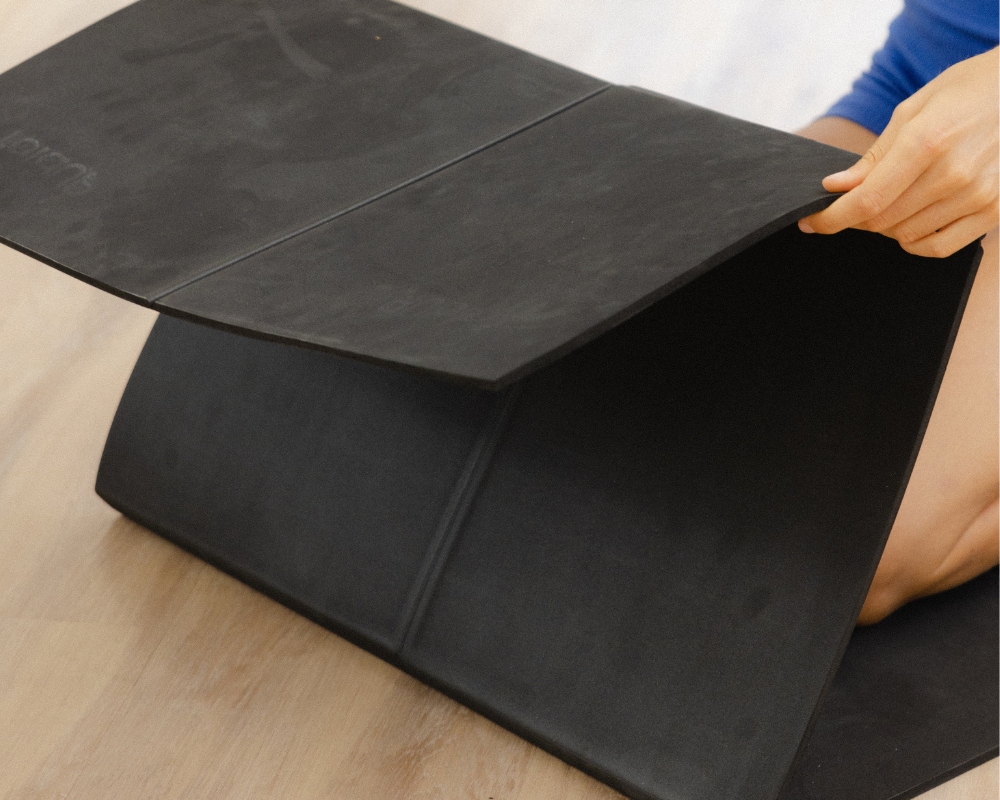
Yoga is a great way to improve flexibility, balance, and strength. However, it can also be challenging for individuals who suffer from injuries or chronic pain. That's why we've developed the perfect solution: a foldable yoga mat that can provide extra support for your joints and help alleviate pain during your practice. Our foldable yoga mat is designed with a unique folding feature that allows you to customize the thickness of the mat to provide extra cushioning exactly where you need it. If you have injuries or chronic pain in your knees, elbows, or wrists, you can easily fold the mat into sections to create a thicker and more supportive surface. By doubling or even tripling the thickness of the mat, you can provide your joints with the extra cushioning they need to stay comfortable and pain-free during your practice. In addition, our foldable yoga mat is made with a non-slip surface, which helps to prevent slipping and sliding during your practice. This is especially important for individuals with injuries, as slips and falls can cause further damage or pain. With our mat, you can practice with confidence knowing that you won't lose your grip and risk hurting yourself. But don't just take our word for it. Here are some of the ways our customers have used our foldable yoga mat to support their injuries: One customer with a knee injury used the mat to create extra cushioning for their knee during kneeling poses, which allowed them to continue practicing yoga without aggravating their injury. Another customer with wrist pain used the mat to provide extra support during poses that required putting weight on their hands and wrists, such as downward dog and plank. A third customer with chronic lower back pain used the mat to create extra cushioning for their spine during poses that required lying on their back, such as bridge pose and savasana. In addition to its supportive features, our foldable yoga mat is also incredibly lightweight and easy to carry. Whether you're headed to a yoga class, traveling, or just practicing at home, you can take this mat with you wherever you go. If you suffer from injuries or chronic pain, don't let that stop you from enjoying the many benefits of yoga. With our foldable yoga mat, you can customise the thickness of the mat to provide extra support exactly where you need it, which can help alleviate pain and discomfort during your practice. Give it a try and see how it can help you take your yoga practice to the next level.
Learn more
Mecca x Face Gym Event featuring foldUP Movement Mat's
When you launch a product based business in Australia, landing your products into Mecca is a dream for many small businesses. As a health and wellness brand selling foldable yoga mats and backpacks, this wasn't part of our plan, as Mecca usually stocks beauty products. Although I'm not giving up hope that one day you'll be able to purchase products for your overall health, and Mecca will be the one-stop-shop for all things beauty, health and wellness. When Mecca reached out to us, just a mere two months after launching, we were in shock - in the best way. They explained there was a new international brand launching into Australia, and into the Mecca stores. Face Gym, is a brand I had seen all over Instagram and aligns so well with our brand values and mission. After a bit of back and forth between Mecca and Face Gym, a large order was placed and we were asked to brand our mats with the two logos. These mats would be used for 4 events for the launch of Face Gym into Mecca. The first event was held at the George Street flagship Mecca store, and it was attended by influencers, beauty editors and industry leaders who were all taught the best way to workout your face, by the founder of Face Gym, Inge Theron. Using a variety of Face Gym's products and tools (such as their medical grade Gua Sha and massage ball), Inge teaches you the importance of a good face workout and the benefits of daily massage techniques to prevent ageing and puffiness. There were 3 more events held at Bondi Pavillion on a beautiful sunny weekend in January 2023. Inge ran back to back classes, open to the public, and practiced on foldUP's Movement Mats. It was such a fun event and I learnt so much about the products and my skin! It was also incredible to see MY products being used by two brands I look up to.
Learn more